
Salon phone answering: keeping the diary full mid-colour
14 August 2026 · 8 min read
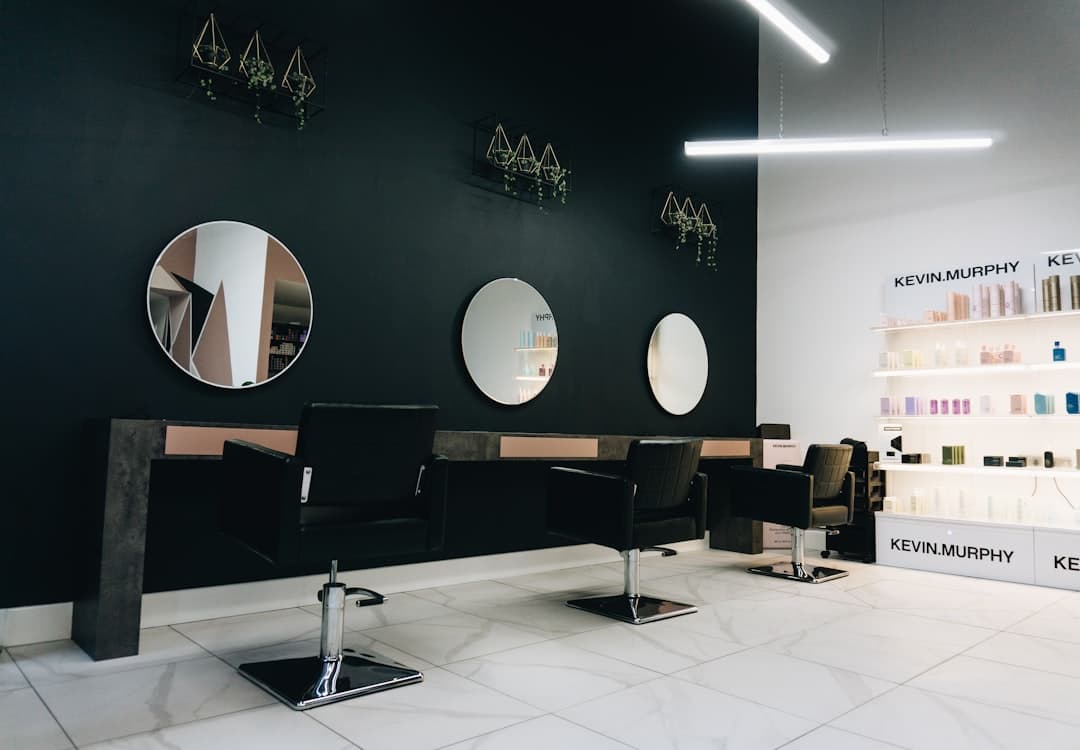
Photo by Greg Trowman on Unsplash
Your hands are in someone's hair. The phone rings. You can't wipe colour off your gloves, cross the floor and sound calm about it — so it rings out. That caller wanted a cut and colour on Saturday, and they'll have it booked with the salon two doors down before your timer goes off. This post looks at what an always-answered line actually changes for a salon, the arithmetic on whether it pays, and when you genuinely don't need one.
Why salons lose calls differently to everyone else
A plumber misses calls because they're under a sink. That's bad, but the caller with a leak will often try again — they need someone and they may need someone today. A salon caller is different in two ways.
First, the intent is a slot, not an emergency. They want Saturday at 11. If you don't answer, the next salon that does answer gets the booking, because the booking is the thing they were shopping for. There's no loyalty to defend when they've never sat in your chair.
Second, your busiest hours are your least answerable hours. Saturday morning is when the phone rings most and when every chair is full. Peak demand and peak unavailability are the same hour. That's a structural problem, not a discipline problem — you're not being lazy, you're physically holding scissors.
Then there's the tail: the 8pm "do you do balayage?", the Sunday "can I move Tuesday to Thursday?", the 7:40am cancellation you find out about at 9:15 when the client doesn't turn up.
The four calls a salon actually gets
Before deciding whether to fix anything, it helps to name what's coming in. Most salon calls fall into four buckets, and they're worth very different amounts.
| Call type | What the caller wants | Cost of missing it |
|---|---|---|
| New booking | A slot, a price, reassurance you do their hair type | High — they book elsewhere the same hour |
| Reschedule | To move an existing appointment | Medium — becomes a no-show if unhandled |
| Cancellation | To free a slot, often last minute | Medium — an empty chair you could have refilled |
| Question | Prices, parking, do you do extensions, is X still there | Low individually, but they're future bookings |
The point of an always-answered line isn't that a machine does your hair consultation. It's that buckets two, three and four stop eating your attention, and bucket one stops leaking.
What changes when the line is always answered
RedAgents' AI receptionist answers calls you can't take. You keep your existing number — one dial code forwards only the missed calls, so nothing on your window, your cards or your Instagram bio has to change. When you pick up, it's business as usual. When you don't, it answers, takes the booking or the question, and sends you a WhatsApp update after the call. Calls are recorded and transcribed, so you can read exactly what was said rather than guess.
The part salon owners tend to care about most: nothing reaches a customer without your yes. Bookings and quotes wait in your inbox for approval. So if the AI has offered Thursday at 2pm and you know Thursday at 2pm is your stock delivery, you edit it before it goes out. You stay in charge of the diary.
There's a testimonial on the RedAgents site from a salon owner in Leeds that puts it more plainly than we can: "I stopped checking my phone mid-colour. Clients get answered, I get a WhatsApp."
Reschedules handled without the awkwardness
Reschedules are the quiet killer. A client who can't reach you to move Tuesday often just doesn't come on Tuesday. You've lost the slot and the client feels guilty, which makes them less likely to rebook at all. When the line is answered, the move happens as a move — you approve the new slot, the old one goes back on the market, and nobody feels bad.
Fewer chairs sitting empty at 10am
If a cancellation reaches you at 7:40am rather than at 9:15am when the client doesn't show, you have ninety minutes to text your waiting list. That's the difference between an empty chair and a filled one. Nothing clever about it — it's just that the information arrived in time to be useful.
Do the maths on one salon
Say a cut and colour is worth £85 to you. Say you miss three calls a week you'd otherwise have converted — one new booking, one reschedule that turns into a no-show, one late cancellation you never got to refill. Be conservative and assume you'd only have won two of those three.
Two × £85 = £170 a week. Over a month, roughly £680 of chair time.
The Growth plan is £69/mo with 300 call minutes included, then £0.25 a minute after that. If your calls average three minutes, 300 minutes is around 100 calls a month — about 25 a week. For a single-site salon that's usually plenty of headroom.
So: £69 against roughly £680 of recovered bookings. Even if our three-calls-a-week guess is twice as generous as your reality, one recovered cut and colour a week (£85 × 4 = £340) still covers the plan five times over.
Your numbers will differ. Do the version with your own average ticket and your own honest guess at missed calls — that's the only calculation that matters.
What it costs
Every feature is on every plan; the only difference is included minutes.
| Plan | Monthly | Included call minutes | After that |
|---|---|---|---|
| Starter | £29 | 100 | £0.25/min |
| Growth | £69 | 300 | £0.25/min |
| Scale | £115 | 600 | £0.25/min |
There's a 7-day free trial with 30 call minutes, no card needed, and you can cancel any time. Starter suits a one-chair or two-chair salon with modest call volume. Most busy high-street salons will want Growth. If you're running two sites off one number, look at Scale. We've broken the pricing down further in AI receptionist cost UK if you want the full comparison against a part-time hire.
Setting it up between clients
This is the bit that stops people. It shouldn't take an afternoon, and it doesn't.
- Paste your website address. The AI reads it to learn your services, your area and your tone — so give it fifteen minutes first and make sure your price list on the site is current. Old prices on the site mean old prices on the phone.
- Preview it. You can hear it answer in about a minute. Ring it yourself and ask the awkward questions a client would: do you do curly cuts, how much is a full head of foils, where do I park.
- Set the dial code so only missed calls forward. Calls you answer stay yours.
- Decide your approval habit. Bookings and quotes land in your inbox; you say yes, edit, or reject. Pick two moments a day to clear them — after your first client and after lunch works for most people.
- Watch the WhatsApp updates for a week and adjust what the AI says about prices and availability based on the transcripts.
If you want the caller's-eye view of the whole thing, what actually happens when an AI receptionist answers walks through it step by step.
On no-shows and confirmations — be realistic
No-shows are the other half of salon economics, and they're partly a communication problem. A booking made three weeks ago with no contact since is a booking that gets forgotten. Anything that puts a human-sounding touchpoint between the booking and the appointment helps.
But be clear about what an answering line does and doesn't do here. It makes sure the client can always reach you to move an appointment rather than silently skip it — which is where a good chunk of no-shows actually come from. It gives you the information earlier. What it isn't is a booking system with automated reminder texts built in; if you rely on confirmation texts, keep whatever software sends them. The two jobs are different, and the honest position is that they sit side by side rather than one replacing the other.
Where this is not the right fit
If you have a full-time front-of-house person who genuinely answers everything, you don't need this. That's not a soft "you might not need it" — a good receptionist who knows your regulars by name, reads the room, upsells a treatment and manages the waiting list is better than any AI. Don't replace them. If anything, an AI line only helps you at the edges: after they've gone home, on their day off, or when they're on the phone to a supplier and a second call comes in.
It's also a poor fit in a few other cases:
- Almost all your bookings come through an app. If clients book through Fresha, Treatwell or your own online booking and the phone barely rings, you're solving a problem you don't have.
- Your service needs a consultation before a price. Extensions, colour corrections, bridal — these need eyes on the hair. An AI can take the enquiry and book a consultation, but it can't quote the job, and you shouldn't want it to.
- You want it to make judgement calls on your diary. It offers slots and you approve them. If you want something that autonomously rearranges a packed Saturday, this isn't it.
- Very low call volume. If you get five calls a week, the honest answer is that voicemail and a callback habit might be enough. We compared the options, including doing nothing, in AI receptionist vs answering service vs voicemail.
The test worth running
You don't have to decide from a blog post. For one week, keep a tally by the till: every time the phone rings out, put a mark. Note whether it was a new number or a client you recognise. At the end of the week you'll have something better than any estimate we could offer — your own missed-call count, in your own handwriting.
Multiply the new numbers by your average ticket. If that figure is bigger than £69, the free trial with 30 call minutes will tell you the rest in a week, and you'll have transcripts of exactly what those callers were asking for.
Never miss another job
RedAgents answers every call 24/7 in your business's name — books jobs, sends quotes, and texts you after every call. Live in about 60 seconds.
See the AI receptionist →